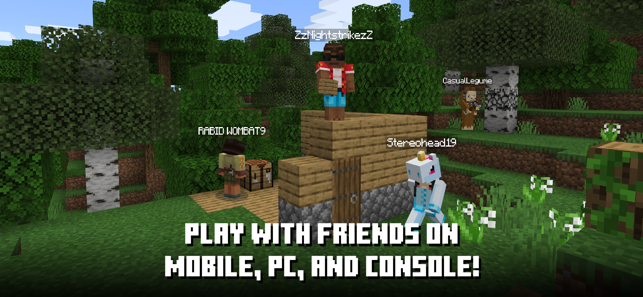
Play Minecraft No Download Just Play
.But there's good news. Minecraft's popularity has led to many attempts to recreate the game, and others in a similar vein, as open source software. Interested in a free Minecraft alternative?
Unfortunately there's no way for you to save your game in the browser that we can find, so you're going to have to just resign yourself to having to. Fighter factory ultimate download. Due to modern browsers incompatibility with Minecraft, we provide Mine Blocks as an alternative. However, you can still play Minecraft on Internet Explorer. If you are having issues loading Minecraft or playing multiplayer, visit the help section. For tips on how to play the game, visit the guide.
Here's a quick look at some clones and derivatives out there that you really ought to check out.These projects are in widely varying levels of completion and serve a number of different goals. Some seek to duplicate the Minecraft experience completely, or to at least provide a very similar experience. Others are taking the voxel-based gaming concept in entirely new directions, and still others are really more of a framework to help you build your own game or creation.
MinetestThe first game on our list is. Minetest is perhaps the most complete alternative to Minecraft, which is billed as a 'near-infinite-world block sandbox game and a game engine.' It supports multiplayer games and subgames, and features a number of terrain generators and different default biomes. It also features a very user-friendly for creating mods in Lua.Minetest is open source under the LGPL, and is written primarily in C so it's fairly fast compared to some others written in scripting languages.
Minetest runs on Windows, OS X, Linux, Android, FreeBSD, and possibly other operating systems as well. Check out the on GitHub.Minetest screenshot, website, CC-BY-SA 3.0. Terasologymight win the award for the most beautiful rendering engine in the pack; its shadows are both ominous and spectacular. What started out as an experiment in procedural terrain generation has turned into a full-featured game, complete with multiplayer and a number of add-on modules installed by default to let you try out different gameplay mechanics.Terasology is written in Java and made available under an Apache 2.0 license.
Because of its Java-based system, it ought to run on just about any platform with sufficient power, so long as you have a Java 8 virtual machine installed.Terasology screenshot, Terasology, Apache 2.0. Voxel.jsThe odd one out in this list is; unlike the others, it's not a game at all and doesn't claim to be. Instead, Voxel.js is a JavaScript library enabling you to build your own Minecraft-style games, renderings, or other interactive widgets in JavaScript and HTML, enabling easy embedding on any webpage with no special plugins needed for any browser that supports WebGL.Voxel.js is put together as a number of related projects, meaning you can use as much or as little of the code as you wish when you craft your perfect game.
The main library, is a fairly basic engine for rendering boxy scenes, but there are over 200 available. Check out the for some ideas of what others have built with the engine. The main engine is released under a BSD-style license; other add-ons may be licensed differently, so it's worth checking before you make assumptions.Screenshot of using Voxel.js, Jason Baker. TrueCraftis written to be very close to the original game. It is described as a Minecraft 'implementation,' as opposed to a clone, and is compatible with official Minecraft server releases. The author of TrueCraft seeks to implement beta version 1.7.3 of the original game, a time in Minecraft's development he deems 'nearly perfect.'
A snapshot intentionally frozen in time, TrueCraft seeks feature-parity with Minecraft.Because it is so close to the original, TrueCraft has taken great pains to avoid copyright issues by allowing code only from developers who have not decompiled or otherwise had access to the original game's source code, though those who have are welcome to contribute in other ways. TrueCraft is written in C# and is open source under an MIT license.TrueCraft screenshot, TrueCraft, MIT license. Craftis another open source voxel engine in the style of Minecraft. Development seems to have slowed or stopped, but there are over 200 forks, many (such as the school project ) with major improvements. Craft's simplicity may appeal to you if you're interested in building a game similar to Minecraft but aren't sure where to start: the game engine resides in just a few thousand lines of C code and uses OpenGL for rendering.
It uses simple algorithms for terrain generation and other tasks, and everything is stored in an SQLite3 database. There's also a Python-based multiplayer server which is worth giving a try.Craft is made available under an MIT license.Craft screenshot, Craft, MIT license. Other great optionsSome other notable mentions you should try:. is another sandbox game inspired by Minecraft and based on Minetest.
As a fork, the authors seek to 'make the game fun while trading off some bits of perfectionism.' It has installers for Linux, Windows, and Android.
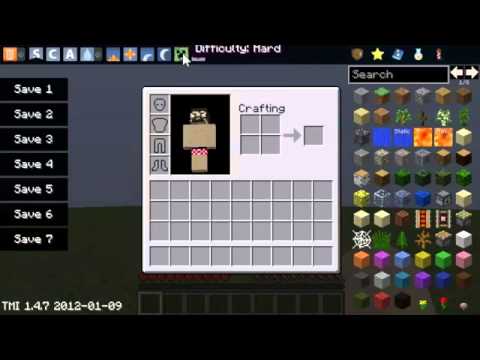
is a Minecraft Classic clone written in C#. It is open source under the OpenTK license, and installs on Linux, BSD, Solaris, Windows, Mac OS, and in a browser.And there you have it.
This list is far from comprehensive; there are many other options out there just waiting for you to explore, and as time goes on we'll undoubtedly see more choices emerge as enthusiasts fork these games or strike out on their own. Which one is your favorite, and which one did we leave off that you wish we had covered?This article was originally published in 2015. It has been updated to include additional suggestions made by readers in the comments, as well as to remove a few projects that are no longer available. It's time to build a better boss monster. No longer will you have to endure your players poking at your monsters'ankles until their hit points are whittled away, and the creature dies from a fatal blow to its big toe. Instead, your heroes can search a near-invincible foe for a weakness, try to exploit it, and fight hard to keep striking the monster where it hurts as it tries to protect its vulnerability. This house rule is great for gaming groups that want a more dynamic and thoughtful D&D combat experience—perhaps your group has very few combat encounters and you want them to be meaningful, or perhaps your game has lots of battles and you want your boss encounters to stand out from the trash mobs.Because of the prevalence of weak point mechanics in video games like The Legend of Zelda, Shadow of the Colossus, and literally hundreds of other examples, this house rule may make your D&D game feel more like a game than a simulation of fantasy life.
This doesn’t have to be the case: fantasy and mythology are flush with stories of legendary warriors and monsters with fatal physical flaws. Consider Achilles and his famous heel from The Iliad, the heavily armored Imperial walkers that could only be defeated by ensnaring their legs in The Empire Strikes Back, and the mighty dragon Smaug’s only vulnerability in The Hobbit.Before using this house rule in your game, consider telling your players outright that your boss monsters will have a weak point that they can seek out to make defeating it easier. For more discussion on open source and the role of the CIO in the enterprise, join us at.The opinions expressed on this website are those of each author, not of the author's employer or of Red Hat.Opensource.com aspires to publish all content under a but may not be able to do so in all cases.
You are responsible for ensuring that you have the necessary permission to reuse any work on this site. Red Hat and the Red Hat logo are trademarks of Red Hat, Inc., registered in the United States and other countries.Copyright ©2019 Red Hat, Inc.
One of the big complaints Minecraft players have is that Minecraft runs on Java — it’s a pain to deal with because it’s insecure and needs frequent updating to avoid exploits, and they’d rather not deal with it at all. Thanks to a new launcher, Minecraft no longer requires you to install Java, so you can finally remove it.The short version is that Minecraft is now bundling a standalone version of Java into their installation and it doesn’t have the security problems and annoyances that regular Java does. The really great thing is that Minecraft should actually run faster in our testing if you use their version instead of the version you already have installed.Update: Microsoft has just released a new launcher for OS X users as well, so we’re updating the article. What New Changes and Why Does It Matter?Over the last few months Mojang has been testing a new launcher for the Windows PC Edition of Minecraft (an OS X launcher is in the works and expected by the end of the year). The primary (and newsworthy) change in the launcher is that it now downloads a stand alone version of Java that is independent of the general local installation of Java on the host machine.RELATED:Why does that matter and why should you care? Java is notorious for zero day exploits and vulnerabilities. We’ve written extensively about Java and the problems with the platform over the years; if you need a solid primer on why exactly Java is such a problem we’d strongly suggest reading over.As awful as Java is and as prone to zero day exploits as it may be, it’s also the magic that drives Minecraft, for better or worse.
Because of this, millions of people around the world who love Minecraft also have to love-hate Java and keep it installed on their system in order to play the game. This new Minecraft development changes the game, however, so that we no longer need a full system-wide Java installation to play the game.You still technically need Java, but it is now downloaded by the Minecraft launcher and stored with the launcher instead of installed across the entire system. If Minecraft is the only reason you have Java installed, you now have no reason to open up your system to Java vulnerabilities.
The Java executable used by Minecraft stays with Minecraft and is as good as invisible and inaccessible to the rest of the system. Better yet, the Minecraft launcher automatically downloads the correct version for your system (all those players inadvertently using Java 32-bit on their 64-bit machines should see significant performance boosts thanks to this) and automatically updates it. All this and you’ll never be again.Right now the new Minecraft launcher for Windows PCs is live on the Minecraft website but the majority of players are still using the old launcher. Let’s take a look at how to update to the new launcher and a peek at the kind of performance benefits you’ll likely reap. Before we proceed, huge thanks to for bringing the new launcher to our attention. How to Switch to the New Launcher on WindowsThe switch over process is as close to painless as it gets; it won’t change where your user data is stored so your there’s no worry about fussing with changing your profile or creating a new one, or any changes with your world saves.You will need to make a very minor tweak, however, as the installer (as of this tutorial) does not automatically default to the new Java instance and will continue to use your existing Java install.The first stop is.
In the Windows section grab a copy of Minecraft.exe. Historically it didn’t really matter where you put the.EXE file as all it did was call up the data stored in your user data folder; the launcher acted essentially like a super charged shortcut. You probably want to be more particular where you place the new version of the launcher simply because it now creates additional sub-directories to house game files like the stand alone Java instance we’re so interested in.On first run, and all subsequent runs where a Java update is detected, you’ll see the download indicator seen above appear briefly. The runtime in question is, you guessed it, the most up-to-date and system appropriate runtime for your machine.After that first run, you’ll see the following sub-directories and files created in the same directory as the launcher. You can see how, if you had the habit of just keeping minecraft.exe on the desktop or the like, you might want to keep it in a distinct folder now.Once in the launcher one small but important tweak is necessary.
Select your profile with the profile selection menu found in the lower left hand corner of the launcher window. Click “Edit Profile.”Update: the latest launcher should point to the right location already. But it’s a good idea to check anyway.Inside the profile menu, look for “Java Settings (Advanced)” at the bottom.
You’ll note that it currently points toward the system wide Java installation in the screenshot above (and you likely see a nearly identical folder path in your own profile). As mentioned above, the new launcher does not yet automatically default to the standalone instance.You need to edit that path to point to the javaw.exe file downloaded by the launcher. This file is relatively located to the launcher executable.
In our example we placed the launcher in C:New Minecraft Launcher for the purpose of this tutorial. If your launcher is, for example, located in D:Minecraft then your path should reflect that. Look in the runtime folder and look in the sub-folders until you find the java executable in question.After you’ve made the change (and double checked that your path is correct) click “Save Profile.” Now when you launch that profile Minecraft will use the standalone Java install stored with the launcher instead of the system-wide Java installation.In fact, if Minecraft is your only use for Java we recommend immediately uninstalling Java from your system. How to Switch to the New Launcher for OS XIf you’re using OS X, you can and get the download link. Once you do, it’s as simple as double-clicking on the DMG and dragging Minecraft into your Applications folder. You’ll notice that this launcher is in beta right now, as it has the stage after the name. You’ll have to assume that soon they will launch this for everybody, and we’ll update this article when they do.Once you do this, you can head into the profile settings and see which version of Java it’s currently pointing to.
It should be the one that was bundled with the new download. Performance ComparisonIn addition to the huge security boost that comes from isolating Java there are also significant potential performance boosts. Many Minecraft players are using 32-bit Java when their hardware supports 64-bit Java. The launcher automatically grabs the correct version.RELATED:In addition many players fail to keep their Java installs updated.
Not only is that terrible from a security standpoint, it’s also terrible from a performance standpoint as Minecraft runs much smoother when you’re using the most current version of Java.We’ll admit that we anticipated a fairly negligible performance boost our test machine as it was running a nearly current version of 64-bit Java 8 (which is a significant improvement over the 32-bit Java 7 most Minecraft players are using).In this screenshot taken before we switched to the standalone Java installation you can see that we’re using 64-bit Java already and pulling down 36 frames per second. This value fluctuated slightly during the test but didn’t rise above 40 FPS.When we switched to the slightly updated standalone Java instance downloaded by the Minecraft launcher and stood idle in the very same spot, our FPS rose to 70 (which is the vsync setting we have set for our particular monitor).
Overall, a surprising shift in performance for what amounted to (on our test machine) a fairly minor change. Players using 32-bit Java 7 upgrading to 64-bit Java 8 should see significant improvements.Have a Minecraft related question? Shoot us an email as ask@howgeek.com and we’ll do our best to answer it.